COVID-19
Armaceutica, Inc. is a pharmaceutical company developing a COVID-19 drug.
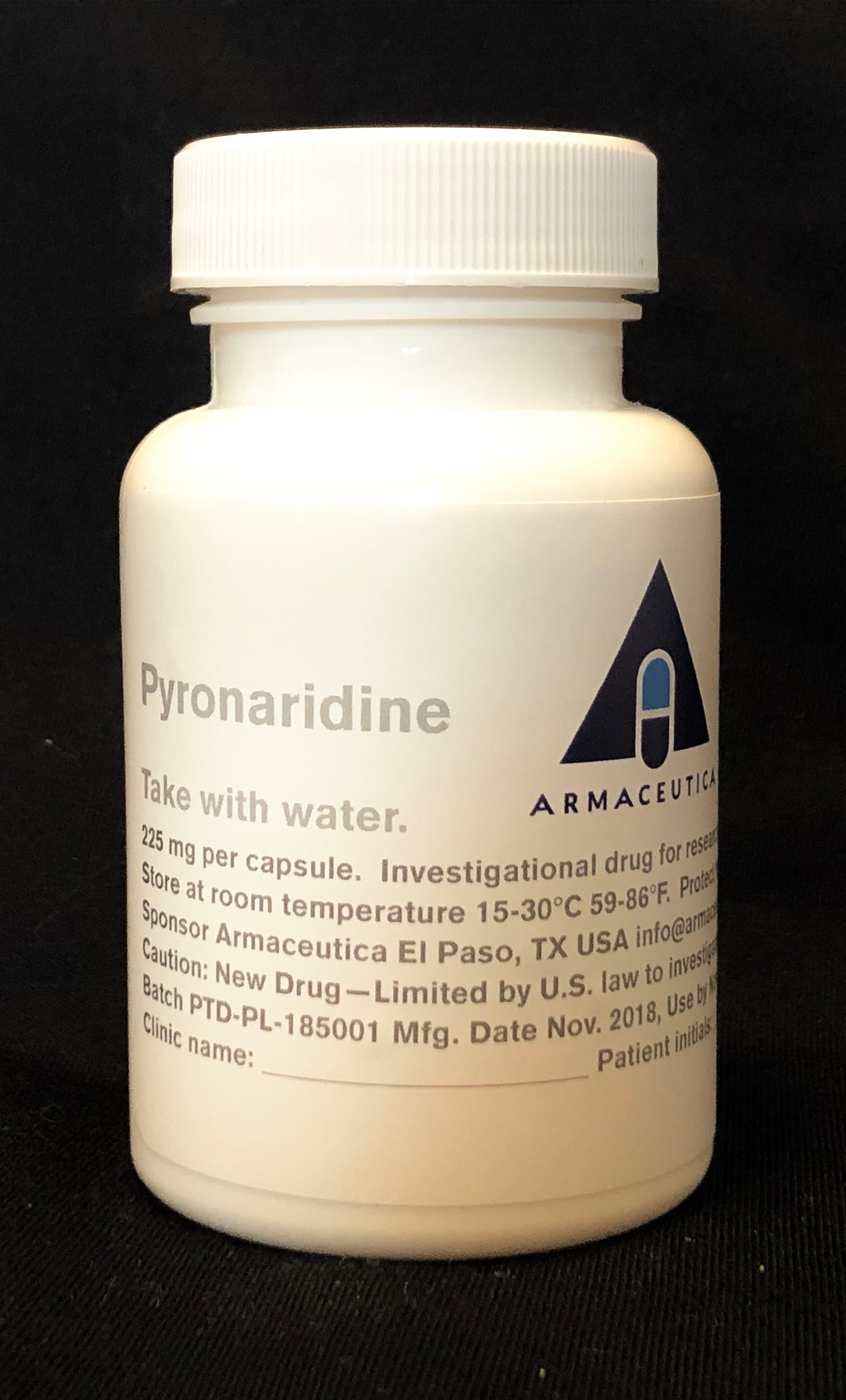
Armaceutica is repurposing the drug pyronaridine (PND) to treat COVID-19 patients. There have been four phase 3 studies on malaria that demonstrated PND is “well tolerated” and has “no serious toxicities" associated with it (2). It is approved and widely prescribed in parts of Asia and Africa for malaria. Our goal is to provide a safe and effective treatment to patients infected with COVID-19 using PND.
We view pyronaridine as a potential COVID-19 drug because PND has structural similarities with quinacrine which also shows inhibitory activity against the Ebola virus (8), reduced IL-6 in Ebola-challenged mice (1) and inhibits human coronavirus 229E (9).
We also have generated evidence that PND-treatment can interfere with signaling pathways(5) including release of IL-6 that interfere with the side-effects of COVID-19 that lead to cytokine-induce damage (cytokine storm) responsible for inflammation and disruption of lung, heart, and kidney function, and death of COVID-19 patients.
We view pyronaridine as a potential COVID-19 drug because it: has structural similarities with quinacrine which also shows inhibitory activity against Ebola virus (8), reduced IL-6 in Ebola-challenged mice (1) and inhibits human coronavirus 229E (9).
Ernest Armstrong and Renato Aguilera are the two owners, joint inventors and joint applicants on the patent application titled: Pyronaridine for the treatment of coronaviruses, filed with the USPTO on March 27, 2020, (US630000592).
Clinical study design: Randomized enrollment of up to n=480 COVID-19 patients, 18-65 years, with mild to moderate symptoms, not hospitalized, and a positive COVID-19 test via nasopharyngeal swab within the past 72 hours. Patients are treated with active or placebo medication for 5 days and keep a symptom diary for 14 days. The primary endpoint is a comparison between the average post-treatment symptom severity of the active group and the placebo group. Protocol title: “COVID-19 Research on Non-hospitalized Humans with Mild to Moderate Symptoms Administered Oral Pyronaridine: A Virtualized, Randomized, Double-Blind, Placebo-Controlled Phase 2 Urgent Study or “CORONAVIRUS Study”.